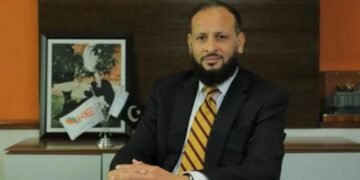






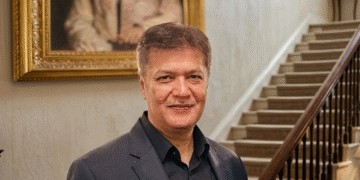

















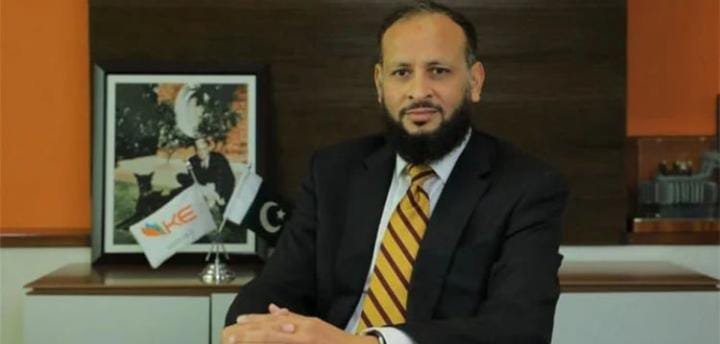
K-Electric revised multi-year tariff has sparked significant concern within the company’s leadership, with Chief Executive Officer (CEO) Monis Abdullah Alvi calling it a major shift that could affect both operations and consumers.
Speaking in an official statement on Monday, Monis Alvi said that the National Electric Power Regulatory Authority (NEPRA) has made “a large-scale change and reduction” in the previously announced multi-year tariff for the utility company.
Background of the K-Electric Tariff Decision
According to K-Electric’s statement, the earlier tariff framework was issued in June 2025, after two and a half years of consultation, research, data verification, and independent scrutiny by NEPRA.
The CEO noted that it was unprecedented to see a completely revised tariff just a few months after its issuance, stating that such an abrupt change has created operational uncertainty for Pakistan’s only vertically integrated power utility serving Karachi and adjoining areas.
“The multi-year tariff, which was finalized after 30 months of exhaustive review, has now been modified drastically within a short span,” Alvi said.
“We are now reviewing the implications to determine how K-Electric can continue its operations sustainably under this new framework.”
Impact on Operations and Consumers
Monis Alvi highlighted that a major cut in K-Electric’s multi-year tariff will inevitably have financial consequences for the company’s cost-recovery structure. He warned that the reduction could influence electricity pricing for end-users in Karachi.
“We are making every possible effort to ensure that consumers remain protected,” he added, “but to some extent, the impact of this revision will be felt.”
He confirmed that the K-Electric management has briefed the Board of Directors regarding the revised tariff, and that internal evaluations are underway to assess its operational and financial implications.
The statement emphasized that K-Electric remains committed to maintaining uninterrupted power supply and service quality despite financial constraints arising from the new regulatory changes.
Nuclear Power Generation Surges by 39.54%
In a related development, NEPRA’s official document reported a 39.54% annual increase in nuclear power generation across Pakistan.
The data shows that 2,227 megawatts (MW) of electricity were produced from nuclear fuel in September 2025, making nuclear energy one of the cheapest sources of power generation in the country.
According to NEPRA, the cost of electricity generated from nuclear fuel stood at Rs 2.18 per unit, reinforcing the growing importance of nuclear power in Pakistan’s energy mix and reducing dependency on expensive imported fuels.
Energy Sector Challenges and Reforms
Industry analysts view the K-Electric revised multi-year tariff and the growing reliance on nuclear power as two major developments shaping Pakistan’s energy landscape.
While the nuclear sector provides cost-efficient electricity, the financial viability of distribution companies like K-Electric depends on predictable tariffs and stable regulatory environments.
Experts have urged NEPRA and K-Electric to engage in constructive dialogue to ensure long-term sustainability without burdening consumers.