
Export financing risks failure
PIDE warns Rs350b facility lacks accountability safeguards. National News Pakistan correspondents report that administrative desks and on-ground observers are closely monitoring developments across Pakistan.
60-Second Editorial Quick Summaryخلاصہ
Verified facts & intelligence briefed by National News Press Bureau.
Pakistan's latest attempt to expand its export base through subsidised long-term financing risks repeating the failures of earlier export promotion schemes unless the government ensures that businesses receiving cheap credit become permanent exporters rather than merely recipients of subsidised machinery, a new analysis has warned.
According to field observations and verified reporting compiled by the Islamabad bureau desk: In a pointed assessment of the government's new Long-Term Export Growth Financing Facility, Professor of Economics and Registrar at the Pakistan Institute of Development Economics (PIDE) Dr Nasir Iqbal argues that Pakistan has become adept at helping businesses enter export markets but has repeatedly failed to ensure they remain there once government incentives disappear.
The challenge, he says, is not simply to make financing cheaper or relax eligibility conditions, but to create productive businesses capable of winning repeat orders, improving export prices and sustaining their presence in international markets.
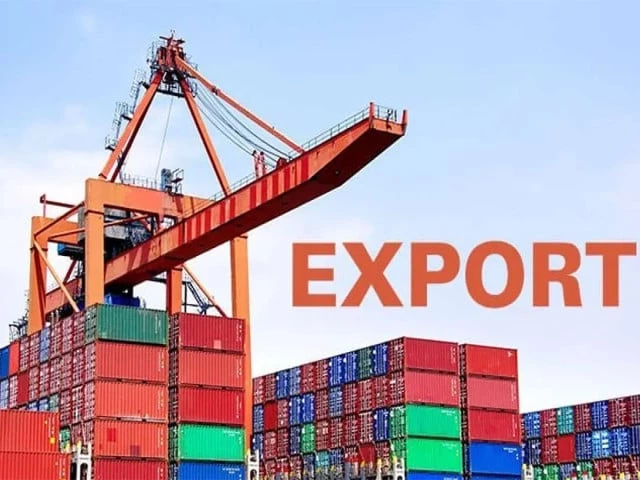
ISLAMABAD BUREAU —Pakistan's latest attempt to expand its export base through subsidised long-term financing risks repeating the failures of earlier export promotion schemes unless the government ensures that businesses receiving cheap credit become permanent exporters rather than merely recipients of subsidised machinery, a new analysis has warned.
According to field observations and verified reporting compiled by the Islamabad bureau desk: In a pointed assessment of the government's new Long-Term Export Growth Financing Facility, Professor of Economics and Registrar at the Pakistan Institute of Development Economics (PIDE) Dr Nasir Iqbal argues that Pakistan has become adept at helping businesses enter export markets but has repeatedly failed to ensure they remain there once government incentives disappear. The challenge, he says, is not simply to make financing cheaper or relax eligibility conditions, but to create productive businesses capable of winning repeat orders, improving export prices and sustaining their presence in international markets. The issue has gained urgency following the Economic Coordination Committee's (ECC) November 20 decision to reduce the minimum export requirement under the EXIM Bank-administered facility from 80% to 50% of sales within four years.
Macroeconomic desks and commercial market observers note that these shifts coincide with national fiscal reform milestones, State Bank policy reviews, and targeted currency management frameworks. Industrial chambers in Karachi, Lahore, and Faisalabad have emphasized the necessity of uninterrupted commercial operations and commodity pricing transparency.
Sectoral stakeholders, consumer advocacy groups, and business leadership continue to assess the cost implications on everyday household budgets, commercial operational overheads, and retail market liquidity across major urban centers in Pakistan.
The Central Editorial Desk of National News Press continues to monitor on-ground developments in real time, with verified updates and formal departmental communiqués to be published as official notifications are finalized.
Key Takeaways & Executive Analysis
- Pakistan's latest attempt to expand its export base through subsidised long-term financing risks repeating the failures of earlier export promotion schemes unless the government ensures that businesses receiving cheap credit become permanent exporters rather than merely recipients of subsidised machinery, a new analysis has warned.
- According to field observations and verified reporting compiled by the Islamabad bureau desk: In a pointed assessment of the government's new Long-Term Export Growth Financing Facility, Professor of Economics and Registrar at the Pakistan Institute of Development Economics (PIDE) Dr Nasir Iqbal argues that Pakistan has become adept at helping businesses enter export markets but has repeatedly failed to ensure they remain there once government incentives disappear.
- The challenge, he says, is not simply to make financing cheaper or relax eligibility conditions, but to create productive businesses capable of winning repeat orders, improving export prices and sustaining their presence in international markets.
Audience Reviews & Discussion
Share your perspective, rate coverage accuracy, and engage with verified readers across Pakistan.