Pakistan Advocates for AI Regulations at UNSC to Control Arms Race
Ambassador Syed Haider Shah, permanent representative of Pakistan to the UN, is addressing a high-level meeting of the 15-member Council on November 25, 2026. — X/@PakistanUN_NYNuke decisions must strictly remain under human control: Pakistan.Envoy calls for curbing arms race...
60-Second Editorial Quick Summaryخلاصہ
Verified facts & intelligence briefed by National News Press Bureau.
Pakistan's Ambassador to the United Nations, Syed Haider Shah, addressed a high-level meeting of the United Nations Security Council (UNSC) on November 25, 2026, emphasizing the need for regulatory frameworks around artificial intelligence to prevent an arms race.
The meeting brought together representatives from the 15-member Council to discuss the implications of AI in military applications and the necessity of maintaining human oversight in critical decision-making processes.
During his address, Ambassador Shah highlighted the potential dangers posed by unregulated AI technologies in warfare, urging member states to prioritize discussions on establishing international norms and standards.
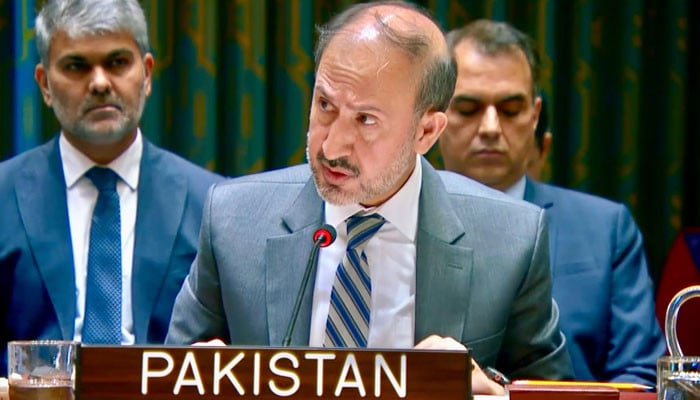
INTERNATIONAL BUREAU —Pakistan's Ambassador to the United Nations, Syed Haider Shah, addressed a high-level meeting of the United Nations Security Council (UNSC) on November 25, 2026, emphasizing the need for regulatory frameworks around artificial intelligence to prevent an arms race. The meeting brought together representatives from the 15-member Council to discuss the implications of AI in military applications and the necessity of maintaining human oversight in critical decision-making processes.
During his address, Ambassador Shah highlighted the potential dangers posed by unregulated AI technologies in warfare, urging member states to prioritize discussions on establishing international norms and standards. He reiterated that nuclear decisions must remain firmly under human control, advocating for a collaborative approach to mitigate risks associated with AI advancements in military contexts.
The call for AI regulations comes amid growing concerns over the rapid development of autonomous weapons systems and their implications for global security. The UNSC has been increasingly focused on the intersection of technology and security, recognizing that without proper oversight, AI could exacerbate existing tensions and lead to unintended conflicts.
The implications of unregulated AI in military applications extend beyond national security, affecting global stability and peace. Stakeholders, including governments, civil society, and the tech industry, are urged to engage in dialogue to create a balanced approach that fosters innovation while ensuring safety and accountability in the use of AI technologies.
National News Press is closely monitoring the developments from the UNSC meeting and will provide updates as the situation evolves, particularly regarding international responses to Pakistan's proposals.
Key Takeaways & Executive Analysis
- Pakistan's Ambassador to the United Nations, Syed Haider Shah, addressed a high-level meeting of the United Nations Security Council (UNSC) on November 25, 2026, emphasizing the need for regulatory frameworks around artificial intelligence to prevent an arms race.
- The meeting brought together representatives from the 15-member Council to discuss the implications of AI in military applications and the necessity of maintaining human oversight in critical decision-making processes.
- During his address, Ambassador Shah highlighted the potential dangers posed by unregulated AI technologies in warfare, urging member states to prioritize discussions on establishing international norms and standards.
National News Press adheres to rigorous standards of accuracy, transparency, and independence. If you notice any factual discrepancy, please review our Editorial Policy or contact our desk at editorial@nationalnews.press.
Audience Reviews & Discussion
Share your perspective, rate coverage accuracy, and engage with verified readers across Pakistan.