
US tariffs: road ahead for Pakistan
Exporters can raise market share due to tariff advantage over competitors. National News Pakistan correspondents report that administrative desks and on-ground observers are closely monitoring developments across Pakistan.
60-Second Editorial Quick Summaryخلاصہ
Verified facts & intelligence briefed by National News Press Bureau.
After President Trump's wide-ranging tariffs, introduced early in his second term, were invalidated by the US Supreme Court in February 2026, the administration has been exploring new ways to reintroduce them on a stronger legal footing.
The court ruled that the administration had improperly invoked an emergency powers law to impose the tariffs, which included a 10% baseline tariff on most imports, including those from Pakistan.
In March 2026, the US initiated investigations into 60 trading partners, alleging their failure to prohibit or effectively enforce restrictions on imports of goods produced using forced labour.
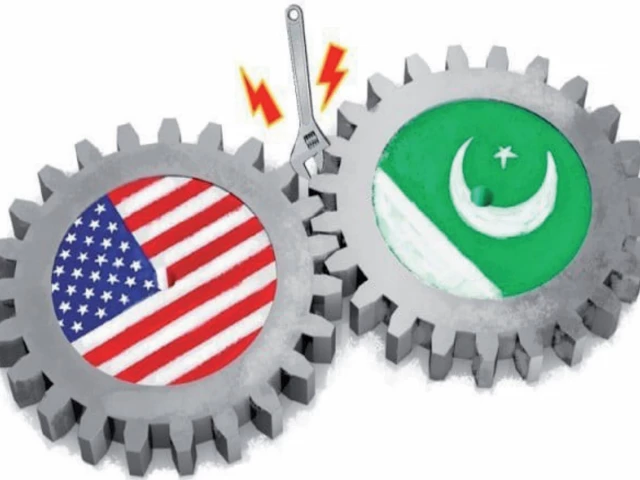
ISLAMABAD BUREAU —After President Trump's wide-ranging tariffs, introduced early in his second term, were invalidated by the US Supreme Court in February 2026, the administration has been exploring new ways to reintroduce them on a stronger legal footing.
The court ruled that the administration had improperly invoked an emergency powers law to impose the tariffs, which included a 10% baseline tariff on most imports, including those from Pakistan. In March 2026, the US initiated investigations into 60 trading partners, alleging their failure to prohibit or effectively enforce restrictions on imports of goods produced using forced labour. Following these investigations, the US imposed duties of 10% to 12.5% in July 2026.
While the legality of these tariffs remains under consideration by the US Court of International Trade, the administration has now proposed higher tariffs on 14 of these countries, including major textile exporters such as China, Vietnam, India, Bangladesh, Thailand, Malaysia and Indonesia. The new tariffs will not be imposed in addition to the existing tariffs, except for MFN tariffs, which are already incorporated into the proposed rates. These proposed tariffs follow detailed investigations conducted over the past six months. The US claims that each of the targeted trading partners has been found to be creating, sustaining or contributing to structural excess capacity that is "divorced from the realities of demand and market principles".
The new tariffs, therefore, call into question not only the trade practices but also the industrial policies of these countries. Since the proposed tariffs follow detailed investigations, with each country being given a specific charge sheet outlining its industrial and trade practices, they appear to rest on a stronger legal foundation than the earlier tariffs. The proposed rates, which could take effect early next year, are not yet final and will depend on the outcome of ongoing negotiations with individual trading partners. For instance, additional duties on goods from Malaysia, Thailand, Indonesia, Cambodia and Bangladesh could reach 18%.
Key Takeaways & Executive Analysis
- After President Trump's wide-ranging tariffs, introduced early in his second term, were invalidated by the US Supreme Court in February 2026, the administration has been exploring new ways to reintroduce them on a stronger legal footing.
- The court ruled that the administration had improperly invoked an emergency powers law to impose the tariffs, which included a 10% baseline tariff on most imports, including those from Pakistan.
- In March 2026, the US initiated investigations into 60 trading partners, alleging their failure to prohibit or effectively enforce restrictions on imports of goods produced using forced labour.
National News Press adheres to rigorous standards of accuracy, transparency, and independence. If you notice any factual discrepancy, please review our Editorial Policy or contact our desk at editorial@nationalnews.press.
Audience Reviews & Discussion
Share your perspective, rate coverage accuracy, and engage with verified readers across Pakistan.