

SM Tanveer Calls for Export-Led Growth Strategy
SM Tanveer has urged Prime Minister Shehbaz Sharif to make Export-Led Growth a central pillar of the Federal Budget 2026-27, emphasizing the need for policies that enhance competitiveness, boost exports, and stimulate economic activity.
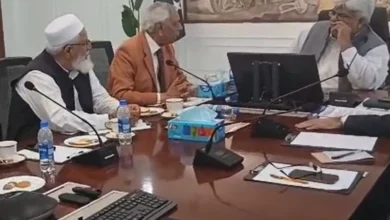
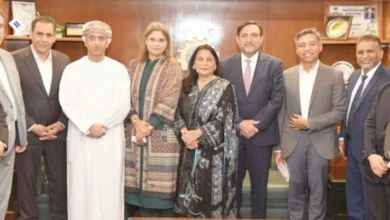
He shared these recommendations during a meeting with the Prime Minister and members of the federal cabinet, which was attended by representatives of the Federation of Pakistan Chambers of Commerce and Industry (FPCCI) and various chambers of commerce.
Appreciation for Diplomatic Efforts
During the meeting, SM Tanveer commended Prime Minister Shehbaz Sharif and Asim Munir for their diplomatic efforts in helping ease regional tensions.
He expressed hope that their contributions toward peace and stability would be remembered as significant milestones in the country’s diplomatic history.
Proposal to Boost Exports Through Incentives
To support Export-Led Growth, SM Tanveer proposed a 10 percent concession under the Duty Drawback of Local Taxes and Levies (DLTL) scheme on year-on-year export growth.
He noted that Pakistan’s exports have remained around $30 billion and argued that targeted incentives are needed to achieve higher export volumes and strengthen foreign exchange earnings.
According to him, export-oriented policies are essential for sustainable economic recovery and long-term growth.
Call for Lower Energy Costs and Tax Relief
SM Tanveer urged the government to reduce electricity tariffs for industry to below nine cents per kilowatt-hour to improve regional competitiveness.
He also recommended lowering industrial tax slabs and criticized the continuation of the super tax, which currently generates an estimated Rs300 billion in revenue.
According to him, reducing the tax burden on productive sectors would encourage investment, support industrial expansion, and create employment opportunities.
Concerns Over Interest Rate Increase
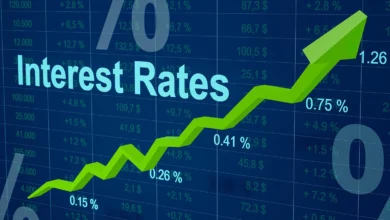
The UBG leader also criticized the State Bank of Pakistan’s decision to raise the policy interest rate by 100 basis points.
He argued that inflationary pressures have largely been influenced by international oil prices rather than domestic borrowing patterns.
According to SM Tanveer, the increase in interest rates has added approximately Rs600 billion to the government’s debt servicing costs, outweighing the revenue generated through the super tax.
He maintained that lower borrowing costs would support investment and economic activity more effectively.
Housing Sector Should Be Revived
SM Tanveer highlighted the importance of the housing sector, noting that it supports more than 80 allied industries and contributes significantly to economic activity.
He proposed the introduction of a financing scheme similar to the Temporary Economic Refinance Facility (TERF) for construction-related sectors.
Among his recommendations were the abolition of Sections 236C and 236K of the tax law and an increase in the housing loan limit for middle-income groups to Rs30 million.
He also informed the Prime Minister that under a previous housing finance scheme with a Rs2.5 million loan ceiling, only 350 applications were approved out of 10,000 applicants.
Simplifying the Tax System
SM Tanveer stressed the need for comprehensive tax reforms to broaden the tax base and simplify compliance procedures.
He pointed out that bank depositors currently hold approximately Rs37 trillion within Pakistan’s banking system, with around Rs20 trillion belonging to nearly 10 million account holders.
To improve tax compliance, he proposed that the Federal Board of Revenue (FBR) utilize customer verification information already collected by banks and introduce a simplified one-page tax return instead of the existing lengthy filing process.
He also suggested adopting the Computerized National Identity Card (CNIC) as the National Tax Number (NTN) to facilitate taxpayer registration and increase the number of active tax filers.
Business Community Seeks Growth-Oriented Reforms
Concluding his proposals, SM Tanveer emphasized that Pakistan’s economic strategy should prioritize Export-Led Growth, industrial competitiveness, tax simplification, and investment-friendly policies.
He maintained that meaningful reforms in the upcoming Federal Budget would help strengthen exports, attract investment, create jobs, and support sustainable economic development across the country.