
Author: Manzar Naqvi
The inauguration of Shahrah-e-Bhutto marks a major milestone in Karachi’s infrastructure development, offering renewed hope for improved transportation, reduced congestion, and stronger economic connectivity in Pakistan’s largest city.
Karachi, widely regarded as the country’s economic lifeline and industrial hub, has struggled for decades with an overburdened road network unable to cope with rapid population growth, rising commercial activity, and increasing transportation demands. In this context, the launch of the 39-kilometer-long Shahrah-e-Bhutto Expressway represents a significant step toward modernizing the city’s transport system.
Shahrah-e-Bhutto Designed for Karachi’s Future Needs
Stretching from Jam Sadiq Bridge to Kathore Bridge, Shahrah-e-Bhutto is a six-lane controlled-access corridor developed to improve mobility and traffic flow across Karachi.
The expressway includes six interchanges, two major toll plazas, five weigh stations, and an underpass. Authorities have also set a speed limit of 100 kilometers per hour to facilitate smoother and faster movement for commuters and commercial traffic.
Officials describe the project as more than just a roadway, calling it a modern transport corridor aimed at supporting Karachi’s long-term urban and economic growth.
Bilawal Bhutto Inaugurates Major Infrastructure Project
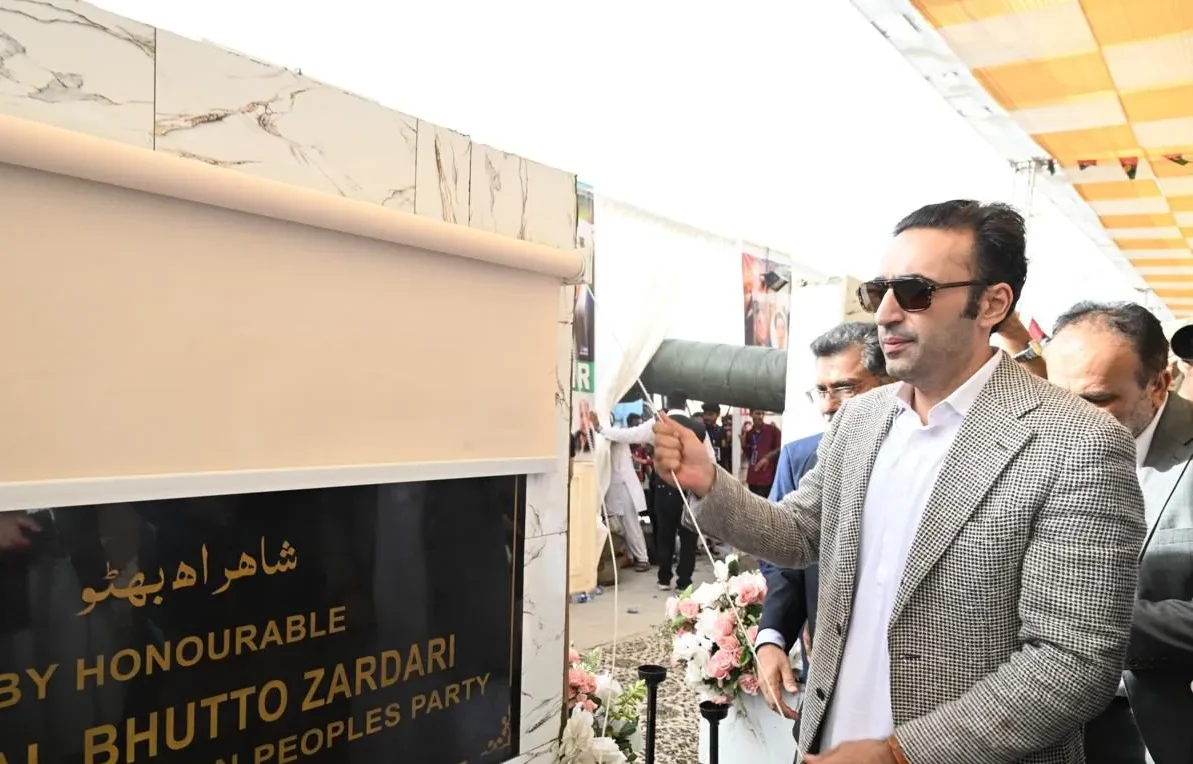
The project was inaugurated by Bilawal Bhutto Zardari, who also laid the foundation stone for the proposed extension from Qayyumabad to Karachi Port.
The planned expansion is intended to connect residential areas, industrial zones, commercial centers, port facilities, and national highways through an integrated transportation network.
Analysts believe Shahrah-e-Bhutto could play an important role in improving economic efficiency by facilitating smoother cargo movement and reducing pressure on existing city roads.
Reduced Travel Time and Improved Connectivity
One of the immediate advantages of Shahrah-e-Bhutto is expected to be a significant reduction in travel time for citizens traveling between central Karachi and the M-9 Motorway.
The new corridor offers commuters a faster and safer alternative to heavily congested roads, potentially lowering fuel consumption, reducing vehicle maintenance costs, and improving overall commuting conditions.
In a city where traffic congestion has become part of daily life, infrastructure experts say projects focused on mobility improvement are essential for public convenience and economic productivity.
Strategic Importance for Trade and Logistics
The expressway is also considered highly important for Karachi’s trade and logistics sector. As Pakistan’s primary commercial gateway, Karachi depends heavily on efficient cargo movement between the port, industrial zones, and markets across the country.
The proposed 16.5-kilometer extension from Qayyumabad to Karachi Port’s East Wharf and SAPT Terminal is expected to provide direct connectivity for cargo traffic.
Experts say this could reduce the movement of heavy vehicles through residential and commercial areas, improve road safety, and lower transportation costs for businesses.
Urban Planning Challenges Still Remain
Urban planners believe Shahrah-e-Bhutto also highlights the urgent need for long-term infrastructure planning in Karachi.
The city’s expansion has often occurred without adequate transport planning, resulting in excessive dependence on a limited number of major roads. Experts argue that Karachi requires multiple high-capacity corridors to distribute traffic effectively and support sustainable urban growth.
Besides easing pressure on existing roads, the new expressway may also create opportunities for planned commercial and residential development along its route.
Long-Term Success Depends on Management
Despite the optimism surrounding the project, analysts stress that the real challenge will begin after inauguration.
Modern transport infrastructure requires continuous maintenance, efficient traffic management, and transparent administration to remain effective over time.
Observers say Shahrah-e-Bhutto symbolizes the possibility of a more organized and modern Karachi. If managed with long-term vision and accountability, the project could become a landmark development in the city’s journey toward progress and economic growth.