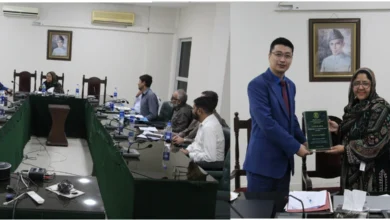


As the government prepares the Federal Budget 2026-27, business leaders are calling for comprehensive reforms aimed at boosting economic growth, attracting investment, and expanding industrial activity.
Zubair Tufail, President of the United Business Group (UBG), has urged the government to incorporate the business community’s recommendations into the upcoming budget to strengthen investor confidence and accelerate economic development.
Zubair Tufail Proposes GST Reduction in Federal Budget
In his budget recommendations, Zubair Tufail proposed reducing the General Sales Tax (GST) rate from 18 percent to 15 percent.
According to him, lower taxation would help stimulate production, encourage investment, and create a more competitive business environment. He also recommended increasing Pakistan’s GDP growth target to 8.5 percent and reducing the maximum income tax rate for salaried individuals from 35 percent to 20 percent.
The proposals are aimed at easing financial pressure on taxpayers while supporting broader economic expansion.
Support for Shadow Budget Recommendations
Zubair Tufail expressed strong support for the Shadow Budget prepared by S. M. Tanveer and Atif Ikram Sheikh.
The document recommends increasing Pakistan’s exports from $30 billion to $80 billion, expanding the tax base from 3 million taxpayers to 100 million people, and raising per capita income from $1,900 to $2,900.
He stated that these proposals provide a roadmap for sustainable economic growth and stronger fiscal performance.
Tax Reforms and Industrial Incentives Recommended
Among his key recommendations for the Federal Budget, Zubair Tufail called for a new fixed tax scheme for the retail sector developed in consultation with traders.
He also stressed the importance of providing industries with energy at competitive rates, arguing that affordable electricity and gas are essential for industrial productivity and export competitiveness.
According to him, a simple and transparent tax system would encourage fresh investment, support the establishment of new industries, create jobs, and increase government revenues without imposing additional tax burdens.
Export Sector Relief and Business Facilitation Measures
Zubair Tufail urged authorities to immediately restore the Final Tax Regime (FTR) for exporters and reinstate the Export Facilitation Scheme in its original form.
He also proposed making export financing facilities more accessible, affordable, and efficient to support exporters operating in competitive international markets.
Additional recommendations included rationalizing customs duties, introducing a National Industrial Policy, implementing a digital tax filing system, and establishing a faceless customs clearance mechanism.
Call for Relief to Businesses and Consumers
The UBG president further recommended increasing the taxable income threshold for salaried individuals and taking strict action against non-filers to broaden the tax net.
He called for reducing discretionary powers of tax officials and introducing digital applications to simplify tax filing procedures.
Special incentives for key sectors such as textiles, information technology, and agriculture were also proposed to stimulate growth and enhance export performance.
Opposition to New Taxes and Super Tax
Zubair Tufail urged the government to avoid imposing approximately Rs500 billion in new taxes through the Federal Budget 2026-27.
He argued that excessive taxation could negatively affect business activity and economic recovery. He also called for lower levies on petroleum products and captive power plants to improve the competitiveness of Pakistani exporters in regional markets.
According to him, the Super Tax has become a significant obstacle to industrial growth and should be abolished in the upcoming budget.
Comprehensive Tax Reform Needed
Concluding his recommendations, Zubair Tufail emphasized that Pakistan’s tax regime requires comprehensive restructuring to achieve Federal Board of Revenue (FBR) targets and boost exports.
He maintained that business-friendly policies, tax reforms, and support for productive sectors are essential for strengthening economic growth, creating employment opportunities, and improving Pakistan’s long-term economic outlook.